It seems we all had the same idea
New AI orchestration tools are released each day but have to beat the pricing of subsidised direct subscriptions.
I said I thought UX was the bottleneck. The flurry of releases since then shows how many others were thinking that too. But to build something people will use you need to do it cheaper on their API than they price their subscriptions, and build a better coding tool, which is what the giants are best at.
Airtable released an agent orchestration product saying:
Intelligence is no longer the bottleneck. Harnessing it is.
A S21 YC company pivoted in Feb 2025 to focus on AI orchestration through a kanban board saying:
The speed of shipping is now limited by how quickly you can plan and review, making these crucial areas to optimise.
Warp, the terminal company, has made an orchestration app that lets you add “different agents” (each has a prompt like ‘you are a product manager’, ‘you are a software engineer’, etc.) to a team to work on a question.
And of course YC are funding agent swarm companies.
The giants moved to. OpenAI released the Codex app on 02/02/26, which lets you run local, worktree, and cloud agents across repos. It’s good, and my experience with it is here.
I think the current issue for orchestrator apps is how much OpenAI and Anthropic subsidise our subscriptions. Using an API key does not make financial sense. And if the model hooks into the subscriptions you’re building on unsteady ground as the providers change their minds. Of course they do not want to accelerate the commoditisation of their product, though OpenAI is going with it for now.
A curious option is to go with the fully local approach as Vibe Kanban have. But then you have to balance your system on Codex local and run your app on localhost. It seems OpenAI gives Linear a way to call codex via an API, but they haven’t opened up to everyone.
Building in this space is a bet on the gap between direct subscriptions and API costs closing. That would be fantastic for UX innovations but not good for the AI company margins.
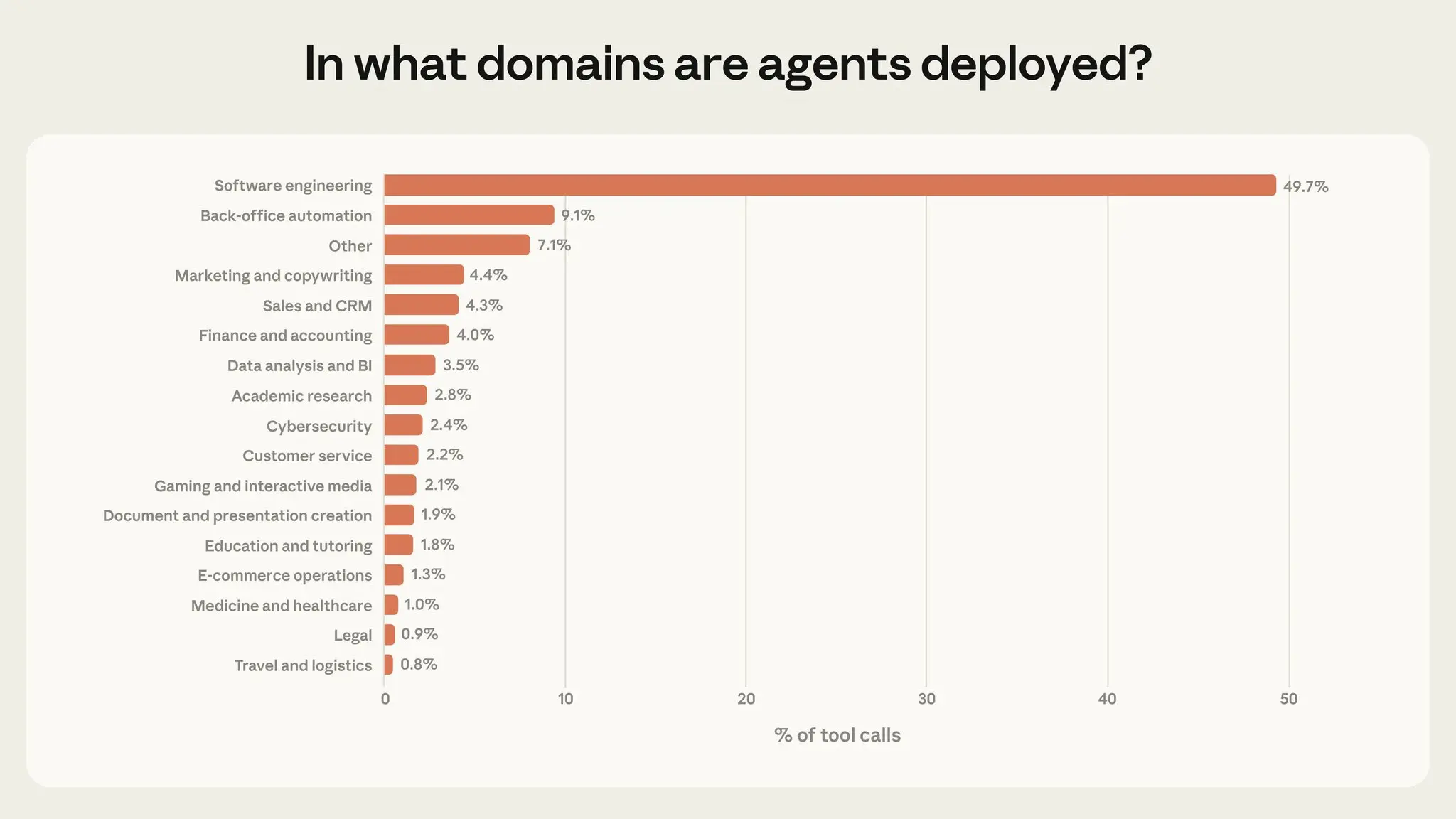
Now, the question is, does the same apply to fields outside of software engineering? If these models aren’t just excellent programmers but excellent generalists, and they set prices to ensure any API product is at a disadvantage, then maybe they eat the rest of this chart too.